EN
Home > News > Industry news > Russia-Ukraine Drone Warfare: Tactical Evolution in Large-Scale Drone Confrontations
On October 24, Moscow Region Governor Vorobyov confirmed that in the morning, in the town of Krasnogorsk, about 20 kilometers from Moscow, a drone crashed into an apartment building, injuring five people. The Russian Ministry of Defense stated that Russian air defense forces intercepted and destroyed 111 Ukrainian drones overnight in multiple regions of Russia, including the Moscow area.
Wei Dongxu, editor-in-chief of Global Military Report at China Media Group, believes that due to difficulties in recruitment and slow delivery of weapons and equipment from the US and Europe, Ukraine faces increasing military pressure. To weaken the Russian offensive capability, the Ukrainian military has begun launching larger-scale drone attacks, while Russian counter-drone tactics and methods are also constantly evolving.
Wei Dongxu, editor-in-chief of Global Military Report at China Media Group, points out that Ukraine currently has three methods to strike deep within Russian territory:
Using HIMARS rocket launchers to fire ATACMS missiles with a range of 300 km, or using Su-24 fighter-bombers to launch Storm Shadow/SCALP-EG cruise missiles provided by Britain and France.
Ukraine currently has very few of these three types of missiles, limiting their strike range.
Sending fighter jets into Russian airspace to conduct bombing missions.
Currently, the quantity and quality of Ukraine’s air force aircraft are insufficient to support such missions, with high risks involved.
Using large numbers of drones to continuously harass deep within Russian territory.
By striking energy facilities and military-industrial production systems, indirectly weakening Russian military capabilities.
Ukraine is currently adopting this increasingly large-scale drone attack tactic.

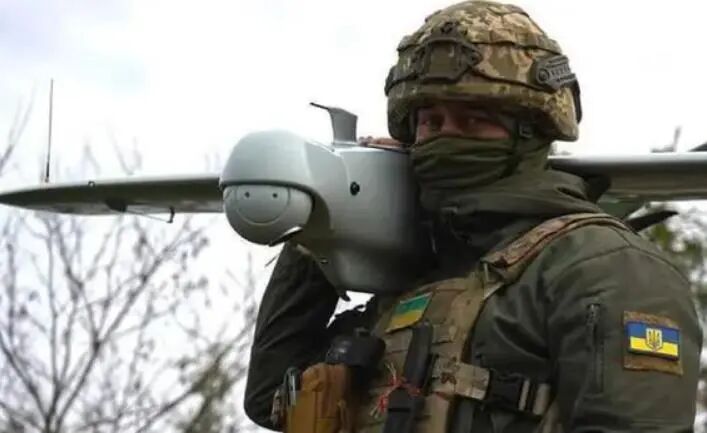
It is understood that Ukraine plans to produce 8 million drones for reconnaissance and attack by 2026. Wei Dongxu believes that 90% of Ukraine’s planned drone production capacity is for producing “First Person View” (FPV) drones, mainly for close-range strike missions targeting personnel, tanks, and vehicles. The remaining capacity is for meeting the needs of long-range strike drones and other equipment.
Documents provided by Ukraine to NATO show that its production of long-range strike drones has reportedly increased to 22 times the 2022 level. Ukraine’s ability to mass-produce drones benefits from European countries providing substantial funds, technology, and mature components.
“To prevent and counter Ukrainian drone attacks, the Russian military has accumulated experience, developed many specialized counter-drone weapons, and improved tactics and methods.”
The Russian military combines traditional air defense weapons with counter-drone operational requirements. Mobile air defense platforms such as Pantsir-S1 and Tor-M2 have achieved impressive results in protecting important targets and strategic facilities.
Strengthening electronic warfare capabilities to implement “soft kills” against Ukrainian drones. For example, the Krasukha-4 mobile electronic jamming vehicle can interfere with drone control and navigation signals over a wide area, preventing drones from hitting targets.
With the support of intelligence and reconnaissance systems, using cruise missiles, tactical ballistic missiles, and long-range suicide drones to conduct precision strikes on Ukraine’s drone production system, weakening the opponent’s drone capabilities at the source.
Strong counter-drone capability
Can track multiple low-altitude targets simultaneously
Equipped with dual firepower of anti-aircraft guns and missiles
High mobility, rapid deployment capability
Can jam drone control and navigation signals
Wide coverage area, strong jamming capability
Mobile deployment, difficult to locate
Effective interference against GPS/GLONASS signals
For both Russia and Ukraine, launching drone attacks or intercepting the opponent’s drones requires increasing resource investment. The conflict that has lasted for three and a half years is a war of attrition for both sides.
Ukraine plans to produce 8 million drones by 2026, while Russia continues to upgrade its counter-drone technology. This technological confrontation has become an important feature of modern warfare.
The Russian military combines traditional air defense weapons with counter-drone operational requirements while strengthening electronic warfare capabilities, demonstrating tactical innovation in modern warfare.
Drone warfare has become an important part of modern warfare, changing the traditional form of war and having profound implications for future military development.
“Intercepting over a hundred drones in a single day has become routine for the Russian military. This drone confrontation is not only an important part of the Russia-Ukraine conflict but also a significant marker in the evolution of modern warfare.”
86-13920737097
AddBuilding 2, Honggao Industrial Park, Bao’an District, Shenzhen, China.
E-mailjackyjingtj@gmail.com
Copyright @ 2025 Military drone jammer|BNT China
Copyright @ 2025 Military drone jammer|BNT China
Copyright @ 2025 Military drone jammer|BNT China